Paris is the capital city of France. It is situated on the River Seine, in northern France, at the heart of the Île-de-France region ("Région parisienne"). The City of Paris has an estimated population of 2,153,600 within its administrative limits. The Paris unité urbaine (or urban area) is an area of unbroken urban growth that extends well beyond the administrative city limits and has a population of 9.93 million. A commuter belt around the unité urbaine completes the Paris aire urbaine (or metropolitan area) that, with its population of 12 million, is one of the most heavily populated areas in Europe.
An important settlement for more than two millennia, Paris is today one of the world's leading business and cultural centres, and its influence in politics, education, entertainment, media, fashion, science and the arts all contribute to its status as one of the world's major global cities. The Paris Region (Île-de-France) is France's foremost centre of economic activity. With €500.8 billion (US$628.9 billion), it produced more than a quarter of the gross domestic product (GDP) of France in 2006. The Paris Region hosts 36 of the Fortune Global 500 companies in several business districts, notably La Défense, the largest purpose-built business district in Europe. Paris also hosts many international organizations such as UNESCO, the OECD, the ICC and the informal Paris Club.
Paris is the most popular tourist destination in the world, with over 30 million foreign visitors per year. There are numerous iconic landmarks among its many attractions, along with world famous institutions and popular parks.
29 Kasım 2007 Perşembe

Paris --- France
Paris is the capital city of France. It is situated on the River Seine, in northern France, at the heart of the Île-de-France region ("Région parisienne"). The City of Paris has an estimated population of 2,153,600 within its administrative limits. The Paris unité urbaine (or urban area) is an area of unbroken urban growth that extends well beyond the administrative city limits and has a population of 9.93 million. A commuter belt around the unité urbaine completes the Paris aire urbaine (or metropolitan area) that, with its population of 12 million, is one of the most heavily populated areas in Europe.
An important settlement for more than two millennia, Paris is today one of the world's leading business and cultural centres, and its influence in politics, education, entertainment, media, fashion, science and the arts all contribute to its status as one of the world's major global cities. The Paris Region (Île-de-France) is France's foremost centre of economic activity. With €500.8 billion (US$628.9 billion), it produced more than a quarter of the gross domestic product (GDP) of France in 2006. The Paris Region hosts 36 of the Fortune Global 500 companies in several business districts, notably La Défense, the largest purpose-built business district in Europe. Paris also hosts many international organizations such as UNESCO, the OECD, the ICC and the informal Paris Club.
Paris is the most popular tourist destination in the world, with over 30 million foreign visitors per year. There are numerous iconic landmarks among its many attractions, along with world famous institutions and popular parks.
An important settlement for more than two millennia, Paris is today one of the world's leading business and cultural centres, and its influence in politics, education, entertainment, media, fashion, science and the arts all contribute to its status as one of the world's major global cities. The Paris Region (Île-de-France) is France's foremost centre of economic activity. With €500.8 billion (US$628.9 billion), it produced more than a quarter of the gross domestic product (GDP) of France in 2006. The Paris Region hosts 36 of the Fortune Global 500 companies in several business districts, notably La Défense, the largest purpose-built business district in Europe. Paris also hosts many international organizations such as UNESCO, the OECD, the ICC and the informal Paris Club.
Paris is the most popular tourist destination in the world, with over 30 million foreign visitors per year. There are numerous iconic landmarks among its many attractions, along with world famous institutions and popular parks.
28 Kasım 2007 Çarşamba
Amsterdam --- Netherlands

Amsterdam is the capital of the Netherlands. The city is known for its historic port, the Rijksmuseum, the red-light district (de Wallen), the liberal coffeeshops, and the canals which have led to Amsterdam being termed the "Venice of the North". During the Dutch Golden Age, Amsterdam was one of the most important ports in the world, with innovative developments in trade, and became the leading centre for finance and diamonds.
The city was founded in the late 12th century as a small fishing village, and has grown to become the largest city in the Netherlands with a population of 743,027 inhabitants, which includes 177 different nationalities, making Amsterdam the most multicultural city in the world.
The metropolitan region has a population of 1,021,870 inhabitants and is part of the conglomerate metropolitan area Randstad, with a population of 6,659,300 inhabitants. The name Amsterdam is a derivative from Amstel dam, that is, a dam in the river Amstel.
The city was founded in the late 12th century as a small fishing village, and has grown to become the largest city in the Netherlands with a population of 743,027 inhabitants, which includes 177 different nationalities, making Amsterdam the most multicultural city in the world.
The metropolitan region has a population of 1,021,870 inhabitants and is part of the conglomerate metropolitan area Randstad, with a population of 6,659,300 inhabitants. The name Amsterdam is a derivative from Amstel dam, that is, a dam in the river Amstel.
Amsterdam --- Netherlands
Amsterdam is the capital of the Netherlands. The city is known for its historic port, the Rijksmuseum, the red-light district (de Wallen), the liberal coffeeshops, and the canals which have led to Amsterdam being termed the "Venice of the North". During the Dutch Golden Age, Amsterdam was one of the most important ports in the world, with innovative developments in trade, and became the leading centre for finance and diamonds.
The city was founded in the late 12th century as a small fishing village, and has grown to become the largest city in the Netherlands with a population of 743,027 inhabitants, which includes 177 different nationalities, making Amsterdam the most multicultural city in the world.
The metropolitan region has a population of 1,021,870 inhabitants and is part of the conglomerate metropolitan area Randstad, with a population of 6,659,300 inhabitants. The name Amsterdam is a derivative from Amstel dam, that is, a dam in the river Amstel.
The city was founded in the late 12th century as a small fishing village, and has grown to become the largest city in the Netherlands with a population of 743,027 inhabitants, which includes 177 different nationalities, making Amsterdam the most multicultural city in the world.
The metropolitan region has a population of 1,021,870 inhabitants and is part of the conglomerate metropolitan area Randstad, with a population of 6,659,300 inhabitants. The name Amsterdam is a derivative from Amstel dam, that is, a dam in the river Amstel.
Hamburg --- Germany

Hamburg (German language pronunciation: [hamburg]; Low German: Hamborg, ['hamburg]) is the second largest city in Germany and along with Hamburg Harbour, its principal port, Hamburg is also the second largest port city in Europe, ninth largest port in the world, and the largest city in the European Union which is not a national capital.
The official name Free and Hanseatic City of Hamburg (German: Freie und Hansestadt Hamburg; Low German: Free un Hansestadt Hamborg) refers to Hamburg's membership in the medieval Hanseatic League and the fact that Hamburg is a City State and one of the sixteen Federal States of Germany.
Hamburg is on the southern tip of the Jutland Peninsula, centered between Continental Europe to the south, Scandinavia to the north, the North Sea to the west, and the Baltic Sea to the east. The city of Hamburg lies at the junction of the River Elbe with the rivers Alster and Bille. The city center is set around two lakes, the Binnenalster ("Inner Alster") and the Außenalster("Outer Alster").
An international trade city, Hamburg is the commercial and cultural centre of Northern Germany. Its citizens are known as Hamburger.
The official name Free and Hanseatic City of Hamburg (German: Freie und Hansestadt Hamburg; Low German: Free un Hansestadt Hamborg) refers to Hamburg's membership in the medieval Hanseatic League and the fact that Hamburg is a City State and one of the sixteen Federal States of Germany.
Hamburg is on the southern tip of the Jutland Peninsula, centered between Continental Europe to the south, Scandinavia to the north, the North Sea to the west, and the Baltic Sea to the east. The city of Hamburg lies at the junction of the River Elbe with the rivers Alster and Bille. The city center is set around two lakes, the Binnenalster ("Inner Alster") and the Außenalster("Outer Alster").
An international trade city, Hamburg is the commercial and cultural centre of Northern Germany. Its citizens are known as Hamburger.
Hamburg --- Germany
Hamburg (German language pronunciation: [hamburg]; Low German: Hamborg, ['hamburg]) is the second largest city in Germany and along with Hamburg Harbour, its principal port, Hamburg is also the second largest port city in Europe, ninth largest port in the world, and the largest city in the European Union which is not a national capital.
The official name Free and Hanseatic City of Hamburg (German: Freie und Hansestadt Hamburg; Low German: Free un Hansestadt Hamborg) refers to Hamburg's membership in the medieval Hanseatic League and the fact that Hamburg is a City State and one of the sixteen Federal States of Germany.
Hamburg is on the southern tip of the Jutland Peninsula, centered between Continental Europe to the south, Scandinavia to the north, the North Sea to the west, and the Baltic Sea to the east. The city of Hamburg lies at the junction of the River Elbe with the rivers Alster and Bille. The city center is set around two lakes, the Binnenalster ("Inner Alster") and the Außenalster("Outer Alster").
An international trade city, Hamburg is the commercial and cultural centre of Northern Germany. Its citizens are known as Hamburger.
The official name Free and Hanseatic City of Hamburg (German: Freie und Hansestadt Hamburg; Low German: Free un Hansestadt Hamborg) refers to Hamburg's membership in the medieval Hanseatic League and the fact that Hamburg is a City State and one of the sixteen Federal States of Germany.
Hamburg is on the southern tip of the Jutland Peninsula, centered between Continental Europe to the south, Scandinavia to the north, the North Sea to the west, and the Baltic Sea to the east. The city of Hamburg lies at the junction of the River Elbe with the rivers Alster and Bille. The city center is set around two lakes, the Binnenalster ("Inner Alster") and the Außenalster("Outer Alster").
An international trade city, Hamburg is the commercial and cultural centre of Northern Germany. Its citizens are known as Hamburger.
Graz --- Austria
Graz [graːts] (etymologically from Slovenian: Gradec IPA: /gra.deʦ/, "little castle"), with a population of 287,723 as of 2006 (of which 250,099 have principal residence status), is the second-largest city in Austria after Vienna and the capital of the federal state of Styria(Steiermark in German).
Graz has a long tradition as a student city: its six universities have over 40,000 students. Graz's "Old Town" is one of the best-preserved city centers in Central Europe. In 1999, it was added to the UNESCO list of World Cultural Heritage Sites. Graz was sole Cultural Capital of Europe for 2003.
Graz has a long tradition as a student city: its six universities have over 40,000 students. Graz's "Old Town" is one of the best-preserved city centers in Central Europe. In 1999, it was added to the UNESCO list of World Cultural Heritage Sites. Graz was sole Cultural Capital of Europe for 2003.
Graz --- Austria
Graz [graːts] (etymologically from Slovenian: Gradec IPA: /gra.deʦ/, "little castle"), with a population of 287,723 as of 2006 (of which 250,099 have principal residence status), is the second-largest city in Austria after Vienna and the capital of the federal state of Styria(Steiermark in German).
Graz has a long tradition as a student city: its six universities have over 40,000 students. Graz's "Old Town" is one of the best-preserved city centers in Central Europe. In 1999, it was added to the UNESCO list of World Cultural Heritage Sites. Graz was sole Cultural Capital of Europe for 2003.
Graz has a long tradition as a student city: its six universities have over 40,000 students. Graz's "Old Town" is one of the best-preserved city centers in Central Europe. In 1999, it was added to the UNESCO list of World Cultural Heritage Sites. Graz was sole Cultural Capital of Europe for 2003.
Frankfurt --- Germany
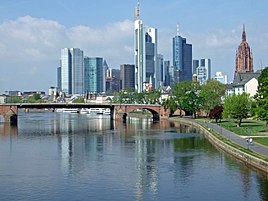
Frankfurt am Main (German: [frankfurt], English: [frankfurt] American English: [frankfurt]) is the largest city in the German state of Hesse and the fifth-largest city in Germany, with a mid-2007 population of 663,567. The urban area had an estimated population of 2,26 million in 2001. The city is at the center of the larger Frankfurt Rhine Main Area which has a population of 5,3 million and is Germany's second largest metropolitan area.
Situated on the Main River, Frankfurt is the financial and transportation centre of Germany and one of the two largest financial centres in continental Europe, the other one being Paris. It is the place of residence of the European Central Bank, the German Federal Bank, the Frankfurt Stock Exchange and the Frankfurt Trade Fair. Frankfurt International Airport is one of the world's busiest airports, Frankfurt Central Station is one of the largest terminal stations in Europe and the Frankfurter Kreuz (Autobahn interchange) is the most heavily used interchange in Europe. Frankfurt is the only german city listed as one of ten Alpha world cities.
Among English speakers the city is commonly known simply as "Frankfurt", though Germans occasionally call it by its full name when it is necessary to distinguish it from the other (significantly smaller) Frankfurt in the German state of Brandenburg, known as Frankfurt (Oder). It was once called Frankfort-on-the-Main in English, a translation of Frankfurt am Main. It is sometimes called FFM or Ffm, which is short for Frankfurt am Main. On road signs its mostly shortened as "F", for example "F-Sachsenhausen".
Frankfurt is sometimes nicknamed "Bankfurt", "Mainhattan" (a word-play with the local Main River and Manhatten) or "The Big Äppel" (also a reference to New York City and the local "Äppelwoi", or apple wine, a type of cider which is produced and drunk mainly in the region).
Situated on the Main River, Frankfurt is the financial and transportation centre of Germany and one of the two largest financial centres in continental Europe, the other one being Paris. It is the place of residence of the European Central Bank, the German Federal Bank, the Frankfurt Stock Exchange and the Frankfurt Trade Fair. Frankfurt International Airport is one of the world's busiest airports, Frankfurt Central Station is one of the largest terminal stations in Europe and the Frankfurter Kreuz (Autobahn interchange) is the most heavily used interchange in Europe. Frankfurt is the only german city listed as one of ten Alpha world cities.
Among English speakers the city is commonly known simply as "Frankfurt", though Germans occasionally call it by its full name when it is necessary to distinguish it from the other (significantly smaller) Frankfurt in the German state of Brandenburg, known as Frankfurt (Oder). It was once called Frankfort-on-the-Main in English, a translation of Frankfurt am Main. It is sometimes called FFM or Ffm, which is short for Frankfurt am Main. On road signs its mostly shortened as "F", for example "F-Sachsenhausen".
Frankfurt is sometimes nicknamed "Bankfurt", "Mainhattan" (a word-play with the local Main River and Manhatten) or "The Big Äppel" (also a reference to New York City and the local "Äppelwoi", or apple wine, a type of cider which is produced and drunk mainly in the region).
Frankfurt --- Germany
Frankfurt am Main (German: [frankfurt], English: [frankfurt] American English: [frankfurt]) is the largest city in the German state of Hesse and the fifth-largest city in Germany, with a mid-2007 population of 663,567. The urban area had an estimated population of 2,26 million in 2001. The city is at the center of the larger Frankfurt Rhine Main Area which has a population of 5,3 million and is Germany's second largest metropolitan area.
Situated on the Main River, Frankfurt is the financial and transportation centre of Germany and one of the two largest financial centres in continental Europe, the other one being Paris. It is the place of residence of the European Central Bank, the German Federal Bank, the Frankfurt Stock Exchange and the Frankfurt Trade Fair. Frankfurt International Airport is one of the world's busiest airports, Frankfurt Central Station is one of the largest terminal stations in Europe and the Frankfurter Kreuz (Autobahn interchange) is the most heavily used interchange in Europe. Frankfurt is the only german city listed as one of ten Alpha world cities.
Among English speakers the city is commonly known simply as "Frankfurt", though Germans occasionally call it by its full name when it is necessary to distinguish it from the other (significantly smaller) Frankfurt in the German state of Brandenburg, known as Frankfurt (Oder). It was once called Frankfort-on-the-Main in English, a translation of Frankfurt am Main. It is sometimes called FFM or Ffm, which is short for Frankfurt am Main. On road signs its mostly shortened as "F", for example "F-Sachsenhausen".
Frankfurt is sometimes nicknamed "Bankfurt", "Mainhattan" (a word-play with the local Main River and Manhatten) or "The Big Äppel" (also a reference to New York City and the local "Äppelwoi", or apple wine, a type of cider which is produced and drunk mainly in the region).
Situated on the Main River, Frankfurt is the financial and transportation centre of Germany and one of the two largest financial centres in continental Europe, the other one being Paris. It is the place of residence of the European Central Bank, the German Federal Bank, the Frankfurt Stock Exchange and the Frankfurt Trade Fair. Frankfurt International Airport is one of the world's busiest airports, Frankfurt Central Station is one of the largest terminal stations in Europe and the Frankfurter Kreuz (Autobahn interchange) is the most heavily used interchange in Europe. Frankfurt is the only german city listed as one of ten Alpha world cities.
Among English speakers the city is commonly known simply as "Frankfurt", though Germans occasionally call it by its full name when it is necessary to distinguish it from the other (significantly smaller) Frankfurt in the German state of Brandenburg, known as Frankfurt (Oder). It was once called Frankfort-on-the-Main in English, a translation of Frankfurt am Main. It is sometimes called FFM or Ffm, which is short for Frankfurt am Main. On road signs its mostly shortened as "F", for example "F-Sachsenhausen".
Frankfurt is sometimes nicknamed "Bankfurt", "Mainhattan" (a word-play with the local Main River and Manhatten) or "The Big Äppel" (also a reference to New York City and the local "Äppelwoi", or apple wine, a type of cider which is produced and drunk mainly in the region).
New York City --- America

New York City (officially The City of New York) is the largest city in the state of New York and the largest city in the United States. The center of the New York metropolitan area, it ranks among the largest urban areas in the world. For more than a century, it has been one of the world's major centers of commerce and finance. New York City is rated as an alpha world city for its global influences in media, politics, education, entertainment and fashion. The city's cultural centers for arts are among the nation's most influential. The city is a major center for foreign affairs, hosting the headquarters of the United Nations. Residents of the city are known as New Yorkers. The current mayor of New York City is Michael Bloomberg.
New York City comprises five boroughs, each of which is coterminous with a county: The Bronx, Brooklyn, Manhattan, Queens and Staten Island. With over 8.2 million residents within an area of 322 square miles (830 km²), New York City is the second most densely populated city in the United States, behind Union City, New Jersey, located across the Hudson River.
The city has many neighborhoods and landmarks known around the world. The Statue of Liberty greeted millions of immigrants as they came to America in the late 19th and early 20th centuries, at Ellis Island. Wall Street, in Lower Manhattan, has been a dominant global financial center since World War II and is home to the New York Stock Exchange. The city has been home to several of the tallest buildings in the world, including the Empire State Building and the former twin towers of the World Trade Center, which were destroyed in the September 11, 2001 attacks.
The city is the birthplace of many American cultural movements, including the Harlem Renaissance in literature and visual art, abstract expressionism (also known as the New York School) in painting, and hip hop, punk, salsa, and Tin Pan Alley in music. In 2005, nearly 170 languages were spoken in the city and 36 percent of its population was born outside the United States. With its 24-hour subway and constant bustling of traffic and people, New York is known as "The City That Never Sleeps."
New York City comprises five boroughs, each of which is coterminous with a county: The Bronx, Brooklyn, Manhattan, Queens and Staten Island. With over 8.2 million residents within an area of 322 square miles (830 km²), New York City is the second most densely populated city in the United States, behind Union City, New Jersey, located across the Hudson River.
The city has many neighborhoods and landmarks known around the world. The Statue of Liberty greeted millions of immigrants as they came to America in the late 19th and early 20th centuries, at Ellis Island. Wall Street, in Lower Manhattan, has been a dominant global financial center since World War II and is home to the New York Stock Exchange. The city has been home to several of the tallest buildings in the world, including the Empire State Building and the former twin towers of the World Trade Center, which were destroyed in the September 11, 2001 attacks.
The city is the birthplace of many American cultural movements, including the Harlem Renaissance in literature and visual art, abstract expressionism (also known as the New York School) in painting, and hip hop, punk, salsa, and Tin Pan Alley in music. In 2005, nearly 170 languages were spoken in the city and 36 percent of its population was born outside the United States. With its 24-hour subway and constant bustling of traffic and people, New York is known as "The City That Never Sleeps."
New York City --- America
New York City (officially The City of New York) is the largest city in the state of New York and the largest city in the United States. The center of the New York metropolitan area, it ranks among the largest urban areas in the world. For more than a century, it has been one of the world's major centers of commerce and finance. New York City is rated as an alpha world city for its global influences in media, politics, education, entertainment and fashion. The city's cultural centers for arts are among the nation's most influential. The city is a major center for foreign affairs, hosting the headquarters of the United Nations. Residents of the city are known as New Yorkers. The current mayor of New York City is Michael Bloomberg.
New York City comprises five boroughs, each of which is coterminous with a county: The Bronx, Brooklyn, Manhattan, Queens and Staten Island. With over 8.2 million residents within an area of 322 square miles (830 km²), New York City is the second most densely populated city in the United States, behind Union City, New Jersey, located across the Hudson River.
The city has many neighborhoods and landmarks known around the world. The Statue of Liberty greeted millions of immigrants as they came to America in the late 19th and early 20th centuries, at Ellis Island. Wall Street, in Lower Manhattan, has been a dominant global financial center since World War II and is home to the New York Stock Exchange. The city has been home to several of the tallest buildings in the world, including the Empire State Building and the former twin towers of the World Trade Center, which were destroyed in the September 11, 2001 attacks.
The city is the birthplace of many American cultural movements, including the Harlem Renaissance in literature and visual art, abstract expressionism (also known as the New York School) in painting, and hip hop, punk, salsa, and Tin Pan Alley in music. In 2005, nearly 170 languages were spoken in the city and 36 percent of its population was born outside the United States. With its 24-hour subway and constant bustling of traffic and people, New York is known as "The City That Never Sleeps."
New York City comprises five boroughs, each of which is coterminous with a county: The Bronx, Brooklyn, Manhattan, Queens and Staten Island. With over 8.2 million residents within an area of 322 square miles (830 km²), New York City is the second most densely populated city in the United States, behind Union City, New Jersey, located across the Hudson River.
The city has many neighborhoods and landmarks known around the world. The Statue of Liberty greeted millions of immigrants as they came to America in the late 19th and early 20th centuries, at Ellis Island. Wall Street, in Lower Manhattan, has been a dominant global financial center since World War II and is home to the New York Stock Exchange. The city has been home to several of the tallest buildings in the world, including the Empire State Building and the former twin towers of the World Trade Center, which were destroyed in the September 11, 2001 attacks.
The city is the birthplace of many American cultural movements, including the Harlem Renaissance in literature and visual art, abstract expressionism (also known as the New York School) in painting, and hip hop, punk, salsa, and Tin Pan Alley in music. In 2005, nearly 170 languages were spoken in the city and 36 percent of its population was born outside the United States. With its 24-hour subway and constant bustling of traffic and people, New York is known as "The City That Never Sleeps."
Bursa --- Turkey

Bursa (historically also known as Brusa, Greek: Προύσσα, Prusa) is a city in northwestern Turkey and the seat of Bursa Province. With a population of 1,194,687 (2000 census), it is Turkey's fourth largest city, as well as one of the most industrialized and culturally charged metropolitan centers in the country.
The city is frequently cited as "Yeşil Bursa" (meaning "Green Bursa") in a reference to the beautiful parks and gardens located across its urban tissue, as well as to the vast forests in rich variety that extend in its surrounding region. The city is synonymous with the mountain Uludağ which towers behind the city core and which is also a famous ski resort. The mausoleums of early Ottoman sultans are located in Bursa and the numerous edifices built throughout the Ottoman period constitute the city's main landmarks. The surrounding fertile plain, its thermal baths, several interesting museums, notably a rich museum of archaeology, and a rather orderly urban growth are further principal elements that complete Bursa's overall picture.
Karagöz and Hacivat shadow play characters were historic personalities who lived and who are buried in Bursa. Bursa is also home to some of the most famous Turkish dishes, especially candied chestnuts and İskender kebap. Its peaches are also well-renowned. Among its depending district centers, İznik, historic Nicaea, is especially notable for its long history and important edifices. Bursa is home to Uludağ University, and its population attains one of the highest overall levels of education in Turkey. It has traditionally been a pole of attraction and of refuge for immigration into Turkey from the Balkans, in sizable waves at times until quite recently.
The city is frequently cited as "Yeşil Bursa" (meaning "Green Bursa") in a reference to the beautiful parks and gardens located across its urban tissue, as well as to the vast forests in rich variety that extend in its surrounding region. The city is synonymous with the mountain Uludağ which towers behind the city core and which is also a famous ski resort. The mausoleums of early Ottoman sultans are located in Bursa and the numerous edifices built throughout the Ottoman period constitute the city's main landmarks. The surrounding fertile plain, its thermal baths, several interesting museums, notably a rich museum of archaeology, and a rather orderly urban growth are further principal elements that complete Bursa's overall picture.
Karagöz and Hacivat shadow play characters were historic personalities who lived and who are buried in Bursa. Bursa is also home to some of the most famous Turkish dishes, especially candied chestnuts and İskender kebap. Its peaches are also well-renowned. Among its depending district centers, İznik, historic Nicaea, is especially notable for its long history and important edifices. Bursa is home to Uludağ University, and its population attains one of the highest overall levels of education in Turkey. It has traditionally been a pole of attraction and of refuge for immigration into Turkey from the Balkans, in sizable waves at times until quite recently.
Bursa --- Turkey
Bursa (historically also known as Brusa, Greek: Προύσσα, Prusa) is a city in northwestern Turkey and the seat of Bursa Province. With a population of 1,194,687 (2000 census), it is Turkey's fourth largest city, as well as one of the most industrialized and culturally charged metropolitan centers in the country.
The city is frequently cited as "Yeşil Bursa" (meaning "Green Bursa") in a reference to the beautiful parks and gardens located across its urban tissue, as well as to the vast forests in rich variety that extend in its surrounding region. The city is synonymous with the mountain Uludağ which towers behind the city core and which is also a famous ski resort. The mausoleums of early Ottoman sultans are located in Bursa and the numerous edifices built throughout the Ottoman period constitute the city's main landmarks. The surrounding fertile plain, its thermal baths, several interesting museums, notably a rich museum of archaeology, and a rather orderly urban growth are further principal elements that complete Bursa's overall picture.
Karagöz and Hacivat shadow play characters were historic personalities who lived and who are buried in Bursa. Bursa is also home to some of the most famous Turkish dishes, especially candied chestnuts and İskender kebap. Its peaches are also well-renowned. Among its depending district centers, İznik, historic Nicaea, is especially notable for its long history and important edifices. Bursa is home to Uludağ University, and its population attains one of the highest overall levels of education in Turkey. It has traditionally been a pole of attraction and of refuge for immigration into Turkey from the Balkans, in sizable waves at times until quite recently.
The city is frequently cited as "Yeşil Bursa" (meaning "Green Bursa") in a reference to the beautiful parks and gardens located across its urban tissue, as well as to the vast forests in rich variety that extend in its surrounding region. The city is synonymous with the mountain Uludağ which towers behind the city core and which is also a famous ski resort. The mausoleums of early Ottoman sultans are located in Bursa and the numerous edifices built throughout the Ottoman period constitute the city's main landmarks. The surrounding fertile plain, its thermal baths, several interesting museums, notably a rich museum of archaeology, and a rather orderly urban growth are further principal elements that complete Bursa's overall picture.
Karagöz and Hacivat shadow play characters were historic personalities who lived and who are buried in Bursa. Bursa is also home to some of the most famous Turkish dishes, especially candied chestnuts and İskender kebap. Its peaches are also well-renowned. Among its depending district centers, İznik, historic Nicaea, is especially notable for its long history and important edifices. Bursa is home to Uludağ University, and its population attains one of the highest overall levels of education in Turkey. It has traditionally been a pole of attraction and of refuge for immigration into Turkey from the Balkans, in sizable waves at times until quite recently.
Ankara --- Turkey

Ankara is the capital of Turkey and the country's second largest city after İstanbul. The city has a population (as of 2005) of 4,319,167 (Province 5,153,000), and a mean elevation of 850 m (2800 ft). It was formerly known as Angora. The Hittites gave it the name Ankuwash before 1200 BC, the Galatians and Romans called it Ancyra, and in the classical, Hellenistic, and Byzantine periods it was known as Ἄγκυρα Ánkyra. Ankara also serves as the capital of the Province of Ankara.
Centrally located in Anatolia, Ankara is an important commercial and industrial city. It is the center of the Turkish Government, and houses all foreign embassies. It is an important crossroads of trade, strategically located at the center of Turkey's highway and railway networks, and serves as the marketing center for the surrounding agricultural area. The city was famous for its long-haired Angora goat and its prized wool (mohair), a unique breed of cat (Angora cat), white rabbits and their prized wool (Angora wool), pears, honey, and the region's muscat grapes.
Ankara is situated upon a steep and rocky hill, which rises 150 m above the plain on the left bank of the Enguri Su, a tributary of the Sakarya (Sangarius) river. The city is located at 39°52'30" North, 32°52' East (39.875° N 32.8333° E). Ankara is one of the driest places in Turkey and is surrounded by a barren steppe vegetation, with various Hittite, Phrygian, Hellenistic, Roman, Byzantine, and Ottoman archaeological sites. It has a harsh, dry continental climate with cold, snowy winters and hot, dry summers. Rainfall occurs mostly during the spring and autumn.
The hill which overlooks the city is crowned by the ruins of the old castle, which adds to the picturesqueness of the view, but only a few historic structures surrounding the old citadel have survived to our date. There are, however, many finely preserved remains of Hellenistic, Roman and Byzantine architecture, the most remarkable being the Temple of Augustus and Rome (20 BC) which is also known as the Monumentum Ancyranum.
Centrally located in Anatolia, Ankara is an important commercial and industrial city. It is the center of the Turkish Government, and houses all foreign embassies. It is an important crossroads of trade, strategically located at the center of Turkey's highway and railway networks, and serves as the marketing center for the surrounding agricultural area. The city was famous for its long-haired Angora goat and its prized wool (mohair), a unique breed of cat (Angora cat), white rabbits and their prized wool (Angora wool), pears, honey, and the region's muscat grapes.
Ankara is situated upon a steep and rocky hill, which rises 150 m above the plain on the left bank of the Enguri Su, a tributary of the Sakarya (Sangarius) river. The city is located at 39°52'30" North, 32°52' East (39.875° N 32.8333° E). Ankara is one of the driest places in Turkey and is surrounded by a barren steppe vegetation, with various Hittite, Phrygian, Hellenistic, Roman, Byzantine, and Ottoman archaeological sites. It has a harsh, dry continental climate with cold, snowy winters and hot, dry summers. Rainfall occurs mostly during the spring and autumn.
The hill which overlooks the city is crowned by the ruins of the old castle, which adds to the picturesqueness of the view, but only a few historic structures surrounding the old citadel have survived to our date. There are, however, many finely preserved remains of Hellenistic, Roman and Byzantine architecture, the most remarkable being the Temple of Augustus and Rome (20 BC) which is also known as the Monumentum Ancyranum.
Ankara --- Turkey
Ankara is the capital of Turkey and the country's second largest city after İstanbul. The city has a population (as of 2005) of 4,319,167 (Province 5,153,000), and a mean elevation of 850 m (2800 ft). It was formerly known as Angora. The Hittites gave it the name Ankuwash before 1200 BC, the Galatians and Romans called it Ancyra, and in the classical, Hellenistic, and Byzantine periods it was known as Ἄγκυρα Ánkyra. Ankara also serves as the capital of the Province of Ankara.
Centrally located in Anatolia, Ankara is an important commercial and industrial city. It is the center of the Turkish Government, and houses all foreign embassies. It is an important crossroads of trade, strategically located at the center of Turkey's highway and railway networks, and serves as the marketing center for the surrounding agricultural area. The city was famous for its long-haired Angora goat and its prized wool (mohair), a unique breed of cat (Angora cat), white rabbits and their prized wool (Angora wool), pears, honey, and the region's muscat grapes.
Ankara is situated upon a steep and rocky hill, which rises 150 m above the plain on the left bank of the Enguri Su, a tributary of the Sakarya (Sangarius) river. The city is located at 39°52'30" North, 32°52' East (39.875° N 32.8333° E). Ankara is one of the driest places in Turkey and is surrounded by a barren steppe vegetation, with various Hittite, Phrygian, Hellenistic, Roman, Byzantine, and Ottoman archaeological sites. It has a harsh, dry continental climate with cold, snowy winters and hot, dry summers. Rainfall occurs mostly during the spring and autumn.
The hill which overlooks the city is crowned by the ruins of the old castle, which adds to the picturesqueness of the view, but only a few historic structures surrounding the old citadel have survived to our date. There are, however, many finely preserved remains of Hellenistic, Roman and Byzantine architecture, the most remarkable being the Temple of Augustus and Rome (20 BC) which is also known as the Monumentum Ancyranum.
Centrally located in Anatolia, Ankara is an important commercial and industrial city. It is the center of the Turkish Government, and houses all foreign embassies. It is an important crossroads of trade, strategically located at the center of Turkey's highway and railway networks, and serves as the marketing center for the surrounding agricultural area. The city was famous for its long-haired Angora goat and its prized wool (mohair), a unique breed of cat (Angora cat), white rabbits and their prized wool (Angora wool), pears, honey, and the region's muscat grapes.
Ankara is situated upon a steep and rocky hill, which rises 150 m above the plain on the left bank of the Enguri Su, a tributary of the Sakarya (Sangarius) river. The city is located at 39°52'30" North, 32°52' East (39.875° N 32.8333° E). Ankara is one of the driest places in Turkey and is surrounded by a barren steppe vegetation, with various Hittite, Phrygian, Hellenistic, Roman, Byzantine, and Ottoman archaeological sites. It has a harsh, dry continental climate with cold, snowy winters and hot, dry summers. Rainfall occurs mostly during the spring and autumn.
The hill which overlooks the city is crowned by the ruins of the old castle, which adds to the picturesqueness of the view, but only a few historic structures surrounding the old citadel have survived to our date. There are, however, many finely preserved remains of Hellenistic, Roman and Byzantine architecture, the most remarkable being the Temple of Augustus and Rome (20 BC) which is also known as the Monumentum Ancyranum.
Berlin --- Germany
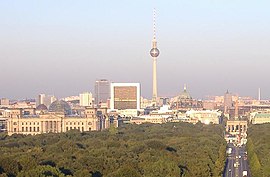
Berlin is the capital city and one of the sixteen states of the Federal Republic of Germany. With a population of 3.4 million in its city limits, Berlin is the country's largest city. It is the second most populous city proper and the ninth most populous urban area in the European Union. Located in northeastern Germany, it is the center of the Berlin-Brandenburg metropolitan area, comprising 4.9 million people from over 180 nations.
First documented in the 13th century, Berlin was successively the capital of the Kingdom of Prussia (1701-1918), the German Empire (1871-1918), the Weimar Republic (1919-1933) and the Third Reich (1933-1945).After World War II, the city was divided; East Berlin became the capital of East Germany while West Berlin became a Western enclave, surrounded by the Berlin Wall from 1961-1989. Following the reunification of Germany in 1990, the city regained its status as the capital of all Germany.
Berlin is a major center in European politics, culture, media, and science. It serves as a continental hub for air and rail transport. The city's economy is primarily based on the service sector, encompassing a diverse range of creative industries, media corporations, environmental services, congress and convention venues.Berlin is the third most-visited tourist destination in the EU.Other industries include traffic engineering, optoelectronics, IT, vehicle manufacturing, health care, biomedical engineering, and biotechnology.
The metropolis is home to world-renowned universities, research institutes, sporting events, orchestras, museums and personalities. Berlin's urban landscape and historical legacy has made it a popular setting for international film productions.Recognized for its festivals, contemporary architecture, nightlife and avant-garde arts, Berlin has evolved into a focal point for individuals attracted by liberal lifestyle, modern zeitgeist and low cost of living.
First documented in the 13th century, Berlin was successively the capital of the Kingdom of Prussia (1701-1918), the German Empire (1871-1918), the Weimar Republic (1919-1933) and the Third Reich (1933-1945).After World War II, the city was divided; East Berlin became the capital of East Germany while West Berlin became a Western enclave, surrounded by the Berlin Wall from 1961-1989. Following the reunification of Germany in 1990, the city regained its status as the capital of all Germany.
Berlin is a major center in European politics, culture, media, and science. It serves as a continental hub for air and rail transport. The city's economy is primarily based on the service sector, encompassing a diverse range of creative industries, media corporations, environmental services, congress and convention venues.Berlin is the third most-visited tourist destination in the EU.Other industries include traffic engineering, optoelectronics, IT, vehicle manufacturing, health care, biomedical engineering, and biotechnology.
The metropolis is home to world-renowned universities, research institutes, sporting events, orchestras, museums and personalities. Berlin's urban landscape and historical legacy has made it a popular setting for international film productions.Recognized for its festivals, contemporary architecture, nightlife and avant-garde arts, Berlin has evolved into a focal point for individuals attracted by liberal lifestyle, modern zeitgeist and low cost of living.
Berlin --- Germany
Berlin is the capital city and one of the sixteen states of the Federal Republic of Germany. With a population of 3.4 million in its city limits, Berlin is the country's largest city. It is the second most populous city proper and the ninth most populous urban area in the European Union. Located in northeastern Germany, it is the center of the Berlin-Brandenburg metropolitan area, comprising 4.9 million people from over 180 nations.
First documented in the 13th century, Berlin was successively the capital of the Kingdom of Prussia (1701-1918), the German Empire (1871-1918), the Weimar Republic (1919-1933) and the Third Reich (1933-1945).After World War II, the city was divided; East Berlin became the capital of East Germany while West Berlin became a Western enclave, surrounded by the Berlin Wall from 1961-1989. Following the reunification of Germany in 1990, the city regained its status as the capital of all Germany.
Berlin is a major center in European politics, culture, media, and science. It serves as a continental hub for air and rail transport. The city's economy is primarily based on the service sector, encompassing a diverse range of creative industries, media corporations, environmental services, congress and convention venues.Berlin is the third most-visited tourist destination in the EU.Other industries include traffic engineering, optoelectronics, IT, vehicle manufacturing, health care, biomedical engineering, and biotechnology.
The metropolis is home to world-renowned universities, research institutes, sporting events, orchestras, museums and personalities. Berlin's urban landscape and historical legacy has made it a popular setting for international film productions.Recognized for its festivals, contemporary architecture, nightlife and avant-garde arts, Berlin has evolved into a focal point for individuals attracted by liberal lifestyle, modern zeitgeist and low cost of living.
First documented in the 13th century, Berlin was successively the capital of the Kingdom of Prussia (1701-1918), the German Empire (1871-1918), the Weimar Republic (1919-1933) and the Third Reich (1933-1945).After World War II, the city was divided; East Berlin became the capital of East Germany while West Berlin became a Western enclave, surrounded by the Berlin Wall from 1961-1989. Following the reunification of Germany in 1990, the city regained its status as the capital of all Germany.
Berlin is a major center in European politics, culture, media, and science. It serves as a continental hub for air and rail transport. The city's economy is primarily based on the service sector, encompassing a diverse range of creative industries, media corporations, environmental services, congress and convention venues.Berlin is the third most-visited tourist destination in the EU.Other industries include traffic engineering, optoelectronics, IT, vehicle manufacturing, health care, biomedical engineering, and biotechnology.
The metropolis is home to world-renowned universities, research institutes, sporting events, orchestras, museums and personalities. Berlin's urban landscape and historical legacy has made it a popular setting for international film productions.Recognized for its festivals, contemporary architecture, nightlife and avant-garde arts, Berlin has evolved into a focal point for individuals attracted by liberal lifestyle, modern zeitgeist and low cost of living.
izmir --- Turkey

Izmir is the 3rd largest City in Turkey and the 2nd largest sea port.
Following the Turkish revolutionary war much of the city needed to be rebuilt; as a result the city today is an interesting mixture of modern High rise buildings with wide tree lined boulevards. There are still many traditional houses and chateaus hidden away to discover though.
Izmir enjoys a temperate climate with mild winters and warm summers, which is probably why the street life is so lively. A walk on the Kordon reveals an endless line of restaurants, Bistros, Bars, Coffee shops and Tea Houses all spilling onto the street. In many cases so close together it is often difficult to know exactly which place you are actually relaxing in.
A visit to Izmir can not be complete without spending a few hours wandering round the Market Area of Kemer Alti. This is a bustling Bazaar where literally anything can be purchased. It is a confusing warren of small allies, dead ends, connecting squares, shopping centers, offices, workshops, cinemas, Mosques and just about anything else you can think of, there is even a renovated Karavan Sarai hidden in there. You are pretty much guaranteed to lose your way, but don't panic you will find your way out eventually.
The culture park in the Alsancak district hosts the annual Izmir International fair, held every year in September. The rest of the year many other fairs and expos take place also. In addition to serving the commercial needs of the city the Culture Park provides a relaxing green area in the middle of the city for the residents to lay back, drink tea play Backgammon and smoke a "hubbly bubbly pipe" (Nagile) or even exercise on the running track.
The city of Izmir itself does not possess any beaches however a short journey to the North, East or South of the city will take you to either hustling tourist resorts, or quiet secluded peaceful beaches the choice is yours.
The region has been inhabited since 3000 AD so the area is rich in historical sites, these can be found within the city (Kadifekale - Bayrakli) but also within a short drive you can find Efesus, Pregamum, Sardis, Teos and many more places to explore.
Night life in Izmir is lively and getting livelier all the time, should you feel the need to rock the night away, you can find many modern Disco's and Night Clubs around all running into the early morning.
Following the Turkish revolutionary war much of the city needed to be rebuilt; as a result the city today is an interesting mixture of modern High rise buildings with wide tree lined boulevards. There are still many traditional houses and chateaus hidden away to discover though.
Izmir enjoys a temperate climate with mild winters and warm summers, which is probably why the street life is so lively. A walk on the Kordon reveals an endless line of restaurants, Bistros, Bars, Coffee shops and Tea Houses all spilling onto the street. In many cases so close together it is often difficult to know exactly which place you are actually relaxing in.
A visit to Izmir can not be complete without spending a few hours wandering round the Market Area of Kemer Alti. This is a bustling Bazaar where literally anything can be purchased. It is a confusing warren of small allies, dead ends, connecting squares, shopping centers, offices, workshops, cinemas, Mosques and just about anything else you can think of, there is even a renovated Karavan Sarai hidden in there. You are pretty much guaranteed to lose your way, but don't panic you will find your way out eventually.
The culture park in the Alsancak district hosts the annual Izmir International fair, held every year in September. The rest of the year many other fairs and expos take place also. In addition to serving the commercial needs of the city the Culture Park provides a relaxing green area in the middle of the city for the residents to lay back, drink tea play Backgammon and smoke a "hubbly bubbly pipe" (Nagile) or even exercise on the running track.
The city of Izmir itself does not possess any beaches however a short journey to the North, East or South of the city will take you to either hustling tourist resorts, or quiet secluded peaceful beaches the choice is yours.
The region has been inhabited since 3000 AD so the area is rich in historical sites, these can be found within the city (Kadifekale - Bayrakli) but also within a short drive you can find Efesus, Pregamum, Sardis, Teos and many more places to explore.
Night life in Izmir is lively and getting livelier all the time, should you feel the need to rock the night away, you can find many modern Disco's and Night Clubs around all running into the early morning.
---------------------------------------------------------------
---------------------------------------------------
Otel Karaca
Address : Necatibey Bulv. 1379 Sokak No:55 Cankaya - Izmir / TURKIYE Phone : +90 232 489 19 40 Fax : +90 232 483 14 98 http://www.otelkaraca.com.tr/
---------------------------------------------------
Hilton Izmir
Address : Gazi Osmanpasa Bulvari No 7, Izmir, TURKIYE Phone : +90 232 497 60 60 Fax : +90 232 497 60 00 http://www.izmir.hilton.com/
--------------------------------------------------
Ege Palas
Address : Cumhuriyet Bulvari No:210 35220 Alsancak - Izmir / TURKIYEPhone : +90 232 463 90 90 Fax : +90 232 463 81 00 http://www.egepalas.com.tr/
izmir --- Turkey
Izmir is the 3rd largest City in Turkey and the 2nd largest sea port.
Following the Turkish revolutionary war much of the city needed to be rebuilt; as a result the city today is an interesting mixture of modern High rise buildings with wide tree lined boulevards. There are still many traditional houses and chateaus hidden away to discover though.
Izmir enjoys a temperate climate with mild winters and warm summers, which is probably why the street life is so lively. A walk on the Kordon reveals an endless line of restaurants, Bistros, Bars, Coffee shops and Tea Houses all spilling onto the street. In many cases so close together it is often difficult to know exactly which place you are actually relaxing in.
A visit to Izmir can not be complete without spending a few hours wandering round the Market Area of Kemer Alti. This is a bustling Bazaar where literally anything can be purchased. It is a confusing warren of small allies, dead ends, connecting squares, shopping centers, offices, workshops, cinemas, Mosques and just about anything else you can think of, there is even a renovated Karavan Sarai hidden in there. You are pretty much guaranteed to lose your way, but don't panic you will find your way out eventually.
The culture park in the Alsancak district hosts the annual Izmir International fair, held every year in September. The rest of the year many other fairs and expos take place also. In addition to serving the commercial needs of the city the Culture Park provides a relaxing green area in the middle of the city for the residents to lay back, drink tea play Backgammon and smoke a "hubbly bubbly pipe" (Nagile) or even exercise on the running track.
The city of Izmir itself does not possess any beaches however a short journey to the North, East or South of the city will take you to either hustling tourist resorts, or quiet secluded peaceful beaches the choice is yours.
The region has been inhabited since 3000 AD so the area is rich in historical sites, these can be found within the city (Kadifekale - Bayrakli) but also within a short drive you can find Efesus, Pregamum, Sardis, Teos and many more places to explore.
Night life in Izmir is lively and getting livelier all the time, should you feel the need to rock the night away, you can find many modern Disco's and Night Clubs around all running into the early morning.
Following the Turkish revolutionary war much of the city needed to be rebuilt; as a result the city today is an interesting mixture of modern High rise buildings with wide tree lined boulevards. There are still many traditional houses and chateaus hidden away to discover though.
Izmir enjoys a temperate climate with mild winters and warm summers, which is probably why the street life is so lively. A walk on the Kordon reveals an endless line of restaurants, Bistros, Bars, Coffee shops and Tea Houses all spilling onto the street. In many cases so close together it is often difficult to know exactly which place you are actually relaxing in.
A visit to Izmir can not be complete without spending a few hours wandering round the Market Area of Kemer Alti. This is a bustling Bazaar where literally anything can be purchased. It is a confusing warren of small allies, dead ends, connecting squares, shopping centers, offices, workshops, cinemas, Mosques and just about anything else you can think of, there is even a renovated Karavan Sarai hidden in there. You are pretty much guaranteed to lose your way, but don't panic you will find your way out eventually.
The culture park in the Alsancak district hosts the annual Izmir International fair, held every year in September. The rest of the year many other fairs and expos take place also. In addition to serving the commercial needs of the city the Culture Park provides a relaxing green area in the middle of the city for the residents to lay back, drink tea play Backgammon and smoke a "hubbly bubbly pipe" (Nagile) or even exercise on the running track.
The city of Izmir itself does not possess any beaches however a short journey to the North, East or South of the city will take you to either hustling tourist resorts, or quiet secluded peaceful beaches the choice is yours.
The region has been inhabited since 3000 AD so the area is rich in historical sites, these can be found within the city (Kadifekale - Bayrakli) but also within a short drive you can find Efesus, Pregamum, Sardis, Teos and many more places to explore.
Night life in Izmir is lively and getting livelier all the time, should you feel the need to rock the night away, you can find many modern Disco's and Night Clubs around all running into the early morning.
---------------------------------------------------------------
---------------------------------------------------
Otel Karaca
Address : Necatibey Bulv. 1379 Sokak No:55 Cankaya - Izmir / TURKIYE Phone : +90 232 489 19 40 Fax : +90 232 483 14 98 http://www.otelkaraca.com.tr/
---------------------------------------------------
Hilton Izmir
Address : Gazi Osmanpasa Bulvari No 7, Izmir, TURKIYE Phone : +90 232 497 60 60 Fax : +90 232 497 60 00 http://www.izmir.hilton.com/
--------------------------------------------------
Ege Palas
Address : Cumhuriyet Bulvari No:210 35220 Alsancak - Izmir / TURKIYEPhone : +90 232 463 90 90 Fax : +90 232 463 81 00 http://www.egepalas.com.tr/
istanbul --- Turkey

HELLO TO ISTANBUL
Located in the center of the Old World, Istanbul is one of the world's great cities famous for its historical monuments and magnificent scenic beauties. It is the only city in the world which spreads over two continents: it lies at a point where Asia and Europe are separated by a narrow strait - the Bosphorus. Istanbul has a history of over 2,500 years, and ever since its establishment on this strategic junction of lands and seas, the city has been a crucial trade center.
The historic city of Istanbul is situated on a peninsula flanked on three sides by the Sea of Marmara, the Bosphorus and the Golden Horn. It has been the capital of three great empires, the Roman, Byzantine and Ottoman empires, and for more than 1,600 years over 120 emperors and sultans ruled the world from here. No other city in the world can claim such a distinction.
During its development, the city was enlarged four times, each time the city walls being rebuilt further to the west.
Surrounded by 5th century Roman city walls and stretching over seven hills, Istanbul is adorned by the masterpieces of Turkish art, the great mosques of the Sultans that crown the hills. The city presents an exquisite, majestic and serene silhouette from all directions. The Golden Horn, which is a very secure natural harbor, has played a significant role in the development of the city.
Fortune provided such advantages to Istanbul as a location at a junction where the main overland routes reach the sea, an easily defensible peninsula, an ideal climate, a rich and generous nature, control of the strategic Bosphorus, and a central geographical position in the ancient world.
As a capital of empires, the city was not only an administrative, but also a religious center. The Patriarchate of Eastern Christians has been headquartered here since its establishment, and the largest early churches and monasteries of the Christian world rose in this city on top of the pagan temples. Within a century after the city was conquered, it was enriched with mosques, palaces, schools, baths and other architectural monuments that gave it a Turkish character, while some of the existing churches in ruins were repaired, altered and converted into mosques.Between the 16th century when the Ottoman sultans acquired themselves the title of the "Caliph of Islam" and 1924, the first year of the Republic, Istanbul was also the headquarters of the Caliphate. More Jews settled in Istanbul than any other port, and here they built themselves a new and happy life after they were rescued from Spain by the Turks in the 15th century. Istanbul has always been a city of tolerance where mosques, churches and synagogues existed side by side. The city was adorned with a large number of dazzling and impressive works even during the period of decline of the Ottomans.
During this time, the influence of European art made itself felt in the new palaces, while the northern slopes of the Golden Horn, Galata and Beyoglu districts assumed a European character. Even when the Empire, which was a party to World War I, collapsed and the young Republic that replaced it moved the capital to Ankara, Istanbul did not lose its significance.
The haphazard development that began in the years following World War II and accelerated in the 1950's has unfortunately had a negative impact on the fabric of the old city, and while old wooden houses disappeared rapidly, concrete buildings proliferated. Istanbul experienced a population explosion due to immigration, and within a very short period it expanded far beyond the historical city walls. The areas inside the walls were invaded by workshops, mills and offices; even the new thoroughfares could not solve the traffic problems, and the inadequacy of the infrastructure gave rise to a sea pollution problem, starting with the Golden Horn.
With the initiatives for saving the city in the 1980s, Istanbul embarked on a process of restructuring on a scale unseen in its history.Thousands of buildings along the Golden Horn were demolished to make way for a green belt on its shores; parks and gardens were built on the land claimed by filling up the beaches of the Sea of Marmara. In order to prevent sea pollution drainage systems were completed and physical and biological wastewater treatment plants were erected; the use of natural gas for heating has considerably reduced air pollution.
Efforts are continuing for the restoration of the Roman city walls, and Beyoglu, the main artery, was rescued by building a newavenue. Improvements were made in ihe general cleaning, maintenance, garbage collection fields and these services are now at Western European standards. Ring roads cross the Bosphorus over two suspension bridges to connect the two continents. The European side has now a fast tramway system and a subway, and comfort and speed has been ensured in sea transportation with the hydrofoil terminals built on the seashores. All industrial establishments on the historic peninsula have been moved to new facilities in the suburbs, and the new international bus terminal has reduced traffic intensity. The old jail and the first large concrete building of the city were given over to tourism and converted into 5-star hotels.
The city is growing dynamically and developing at full speed on an east-west axis along the shores of the Marmara.
english.istanbul.gov.tr


The historic city of Istanbul is situated on a peninsula flanked on three sides by the Sea of Marmara, the Bosphorus and the Golden Horn. It has been the capital of three great empires, the Roman, Byzantine and Ottoman empires, and for more than 1,600 years over 120 emperors and sultans ruled the world from here. No other city in the world can claim such a distinction.
During its development, the city was enlarged four times, each time the city walls being rebuilt further to the west.
Surrounded by 5th century Roman city walls and stretching over seven hills, Istanbul is adorned by the masterpieces of Turkish art, the great mosques of the Sultans that crown the hills. The city presents an exquisite, majestic and serene silhouette from all directions. The Golden Horn, which is a very secure natural harbor, has played a significant role in the development of the city.
Fortune provided such advantages to Istanbul as a location at a junction where the main overland routes reach the sea, an easily defensible peninsula, an ideal climate, a rich and generous nature, control of the strategic Bosphorus, and a central geographical position in the ancient world.
As a capital of empires, the city was not only an administrative, but also a religious center. The Patriarchate of Eastern Christians has been headquartered here since its establishment, and the largest early churches and monasteries of the Christian world rose in this city on top of the pagan temples. Within a century after the city was conquered, it was enriched with mosques, palaces, schools, baths and other architectural monuments that gave it a Turkish character, while some of the existing churches in ruins were repaired, altered and converted into mosques.Between the 16th century when the Ottoman sultans acquired themselves the title of the "Caliph of Islam" and 1924, the first year of the Republic, Istanbul was also the headquarters of the Caliphate. More Jews settled in Istanbul than any other port, and here they built themselves a new and happy life after they were rescued from Spain by the Turks in the 15th century. Istanbul has always been a city of tolerance where mosques, churches and synagogues existed side by side. The city was adorned with a large number of dazzling and impressive works even during the period of decline of the Ottomans.
During this time, the influence of European art made itself felt in the new palaces, while the northern slopes of the Golden Horn, Galata and Beyoglu districts assumed a European character. Even when the Empire, which was a party to World War I, collapsed and the young Republic that replaced it moved the capital to Ankara, Istanbul did not lose its significance.
The haphazard development that began in the years following World War II and accelerated in the 1950's has unfortunately had a negative impact on the fabric of the old city, and while old wooden houses disappeared rapidly, concrete buildings proliferated. Istanbul experienced a population explosion due to immigration, and within a very short period it expanded far beyond the historical city walls. The areas inside the walls were invaded by workshops, mills and offices; even the new thoroughfares could not solve the traffic problems, and the inadequacy of the infrastructure gave rise to a sea pollution problem, starting with the Golden Horn.
With the initiatives for saving the city in the 1980s, Istanbul embarked on a process of restructuring on a scale unseen in its history.Thousands of buildings along the Golden Horn were demolished to make way for a green belt on its shores; parks and gardens were built on the land claimed by filling up the beaches of the Sea of Marmara. In order to prevent sea pollution drainage systems were completed and physical and biological wastewater treatment plants were erected; the use of natural gas for heating has considerably reduced air pollution.
Efforts are continuing for the restoration of the Roman city walls, and Beyoglu, the main artery, was rescued by building a newavenue. Improvements were made in ihe general cleaning, maintenance, garbage collection fields and these services are now at Western European standards. Ring roads cross the Bosphorus over two suspension bridges to connect the two continents. The European side has now a fast tramway system and a subway, and comfort and speed has been ensured in sea transportation with the hydrofoil terminals built on the seashores. All industrial establishments on the historic peninsula have been moved to new facilities in the suburbs, and the new international bus terminal has reduced traffic intensity. The old jail and the first large concrete building of the city were given over to tourism and converted into 5-star hotels.
The city is growing dynamically and developing at full speed on an east-west axis along the shores of the Marmara.
english.istanbul.gov.tr


istanbul --- Turkey
HELLO TO ISTANBUL
Located in the center of the Old World, Istanbul is one of the world's great cities famous for its historical monuments and magnificent scenic beauties. It is the only city in the world which spreads over two continents: it lies at a point where Asia and Europe are separated by a narrow strait - the Bosphorus. Istanbul has a history of over 2,500 years, and ever since its establishment on this strategic junction of lands and seas, the city has been a crucial trade center.
The historic city of Istanbul is situated on a peninsula flanked on three sides by the Sea of Marmara, the Bosphorus and the Golden Horn. It has been the capital of three great empires, the Roman, Byzantine and Ottoman empires, and for more than 1,600 years over 120 emperors and sultans ruled the world from here. No other city in the world can claim such a distinction.
During its development, the city was enlarged four times, each time the city walls being rebuilt further to the west.
Surrounded by 5th century Roman city walls and stretching over seven hills, Istanbul is adorned by the masterpieces of Turkish art, the great mosques of the Sultans that crown the hills. The city presents an exquisite, majestic and serene silhouette from all directions. The Golden Horn, which is a very secure natural harbor, has played a significant role in the development of the city.
Fortune provided such advantages to Istanbul as a location at a junction where the main overland routes reach the sea, an easily defensible peninsula, an ideal climate, a rich and generous nature, control of the strategic Bosphorus, and a central geographical position in the ancient world.
As a capital of empires, the city was not only an administrative, but also a religious center. The Patriarchate of Eastern Christians has been headquartered here since its establishment, and the largest early churches and monasteries of the Christian world rose in this city on top of the pagan temples. Within a century after the city was conquered, it was enriched with mosques, palaces, schools, baths and other architectural monuments that gave it a Turkish character, while some of the existing churches in ruins were repaired, altered and converted into mosques.Between the 16th century when the Ottoman sultans acquired themselves the title of the "Caliph of Islam" and 1924, the first year of the Republic, Istanbul was also the headquarters of the Caliphate. More Jews settled in Istanbul than any other port, and here they built themselves a new and happy life after they were rescued from Spain by the Turks in the 15th century. Istanbul has always been a city of tolerance where mosques, churches and synagogues existed side by side. The city was adorned with a large number of dazzling and impressive works even during the period of decline of the Ottomans.
During this time, the influence of European art made itself felt in the new palaces, while the northern slopes of the Golden Horn, Galata and Beyoglu districts assumed a European character. Even when the Empire, which was a party to World War I, collapsed and the young Republic that replaced it moved the capital to Ankara, Istanbul did not lose its significance.
The haphazard development that began in the years following World War II and accelerated in the 1950's has unfortunately had a negative impact on the fabric of the old city, and while old wooden houses disappeared rapidly, concrete buildings proliferated. Istanbul experienced a population explosion due to immigration, and within a very short period it expanded far beyond the historical city walls. The areas inside the walls were invaded by workshops, mills and offices; even the new thoroughfares could not solve the traffic problems, and the inadequacy of the infrastructure gave rise to a sea pollution problem, starting with the Golden Horn.
With the initiatives for saving the city in the 1980s, Istanbul embarked on a process of restructuring on a scale unseen in its history.Thousands of buildings along the Golden Horn were demolished to make way for a green belt on its shores; parks and gardens were built on the land claimed by filling up the beaches of the Sea of Marmara. In order to prevent sea pollution drainage systems were completed and physical and biological wastewater treatment plants were erected; the use of natural gas for heating has considerably reduced air pollution.
Efforts are continuing for the restoration of the Roman city walls, and Beyoglu, the main artery, was rescued by building a newavenue. Improvements were made in ihe general cleaning, maintenance, garbage collection fields and these services are now at Western European standards. Ring roads cross the Bosphorus over two suspension bridges to connect the two continents. The European side has now a fast tramway system and a subway, and comfort and speed has been ensured in sea transportation with the hydrofoil terminals built on the seashores. All industrial establishments on the historic peninsula have been moved to new facilities in the suburbs, and the new international bus terminal has reduced traffic intensity. The old jail and the first large concrete building of the city were given over to tourism and converted into 5-star hotels.
The city is growing dynamically and developing at full speed on an east-west axis along the shores of the Marmara.
english.istanbul.gov.tr
The historic city of Istanbul is situated on a peninsula flanked on three sides by the Sea of Marmara, the Bosphorus and the Golden Horn. It has been the capital of three great empires, the Roman, Byzantine and Ottoman empires, and for more than 1,600 years over 120 emperors and sultans ruled the world from here. No other city in the world can claim such a distinction.
During its development, the city was enlarged four times, each time the city walls being rebuilt further to the west.
Surrounded by 5th century Roman city walls and stretching over seven hills, Istanbul is adorned by the masterpieces of Turkish art, the great mosques of the Sultans that crown the hills. The city presents an exquisite, majestic and serene silhouette from all directions. The Golden Horn, which is a very secure natural harbor, has played a significant role in the development of the city.
Fortune provided such advantages to Istanbul as a location at a junction where the main overland routes reach the sea, an easily defensible peninsula, an ideal climate, a rich and generous nature, control of the strategic Bosphorus, and a central geographical position in the ancient world.
As a capital of empires, the city was not only an administrative, but also a religious center. The Patriarchate of Eastern Christians has been headquartered here since its establishment, and the largest early churches and monasteries of the Christian world rose in this city on top of the pagan temples. Within a century after the city was conquered, it was enriched with mosques, palaces, schools, baths and other architectural monuments that gave it a Turkish character, while some of the existing churches in ruins were repaired, altered and converted into mosques.Between the 16th century when the Ottoman sultans acquired themselves the title of the "Caliph of Islam" and 1924, the first year of the Republic, Istanbul was also the headquarters of the Caliphate. More Jews settled in Istanbul than any other port, and here they built themselves a new and happy life after they were rescued from Spain by the Turks in the 15th century. Istanbul has always been a city of tolerance where mosques, churches and synagogues existed side by side. The city was adorned with a large number of dazzling and impressive works even during the period of decline of the Ottomans.
During this time, the influence of European art made itself felt in the new palaces, while the northern slopes of the Golden Horn, Galata and Beyoglu districts assumed a European character. Even when the Empire, which was a party to World War I, collapsed and the young Republic that replaced it moved the capital to Ankara, Istanbul did not lose its significance.
The haphazard development that began in the years following World War II and accelerated in the 1950's has unfortunately had a negative impact on the fabric of the old city, and while old wooden houses disappeared rapidly, concrete buildings proliferated. Istanbul experienced a population explosion due to immigration, and within a very short period it expanded far beyond the historical city walls. The areas inside the walls were invaded by workshops, mills and offices; even the new thoroughfares could not solve the traffic problems, and the inadequacy of the infrastructure gave rise to a sea pollution problem, starting with the Golden Horn.
With the initiatives for saving the city in the 1980s, Istanbul embarked on a process of restructuring on a scale unseen in its history.Thousands of buildings along the Golden Horn were demolished to make way for a green belt on its shores; parks and gardens were built on the land claimed by filling up the beaches of the Sea of Marmara. In order to prevent sea pollution drainage systems were completed and physical and biological wastewater treatment plants were erected; the use of natural gas for heating has considerably reduced air pollution.
Efforts are continuing for the restoration of the Roman city walls, and Beyoglu, the main artery, was rescued by building a newavenue. Improvements were made in ihe general cleaning, maintenance, garbage collection fields and these services are now at Western European standards. Ring roads cross the Bosphorus over two suspension bridges to connect the two continents. The European side has now a fast tramway system and a subway, and comfort and speed has been ensured in sea transportation with the hydrofoil terminals built on the seashores. All industrial establishments on the historic peninsula have been moved to new facilities in the suburbs, and the new international bus terminal has reduced traffic intensity. The old jail and the first large concrete building of the city were given over to tourism and converted into 5-star hotels.
The city is growing dynamically and developing at full speed on an east-west axis along the shores of the Marmara.
english.istanbul.gov.tr
Bodrum --- Turkey

840km (521 miles) south of Istanbul; 240km (149 miles) south of Izmir; 180km (112 miles) west of Marmaris; 25km (16 miles) south of Bodrum Airport
Less than 100 years ago, Turkish writer Cevat Sakir Kabaagaçli was sentenced to exile in the dungeon of St. Peter's Castle as punishment for his politically incorrect writings. Times under the paranoid Abdülhamid II were harsh -- except the sultan apparently didn't know that the prison had been closed a decade earlier. With the help of the local governor, Cevat found a house overlooking the sea in which to live out his period of exile, enjoying a view so picturesque that it inspired him to pen piles of essays on the beauty and allure of life in what was then a laid-back fishing village.
As a probable result of this early bit of marketing, Bodrum has become Turkey's most popular seaside tourist destination, a perfect balance of whitewashed stucco hillside houses dripping in bougainvillea, magnificent vistas, historic imprints, and blow-out nightlife. St. Peter's Castle dominates every corner of Bodrum from its spot at the middle of Bodrum's twin harbors. The crumbled yet enduring remains of the Mausoleum, one of the Seven Ancient Wonders of the World, also resides in Bodrum. And although Turkey's most popular "party destination," by day Bodrum is a quiet but thriving holiday beach resort. In the summertime the city's twin harbors become densely packed with hundreds of the wooden gulets offering trips to the nearby islands or for the Mavi Yoluculu (the "Blue Cruise"), Cevat's romanticized weeklong journey along the glorious coastlines of the Mediterranean. Meanwhile, Bodrum's nightlife -- an all-night party organized by club owners each trying to outdo the excesses and spectacle of the other -- is infamous throughout Turkey. By night the city becomes a maniacal stream of human flesh flowing through the narrow expanse of "Bar Street," which empties onto an open harbor of more outdoor cafes and bars, the whole sporadically illuminated by a laser show emanating from the famed Halikarnas Night Club. From every vantage point in town, there's St. Peter's Castle, illuminated by spotlights shining on the ramparts.
Bodrum's popularity seems to have no limits, and as fast as the Turkish jet-set can lay its claim to a secluded cove or sandy bay, tourism follows, spurring the entitled class to seek new unspoiled hunting grounds. Examples of this can be seen all along the Bodrum Peninsula, in the boutique hotels and beaches of Torba and Türkbükü, in the expansive seasides at Yalikavak, Turgutreis, Ortakent, and Akyarlar, and in the poetry of the sunken ruins and waterside fish restaurants of Gümüslük. Clearly, Bodrum still has quite a long way to go before becoming just another one of Turkey's overbuilt seaside resorts.
Less than 100 years ago, Turkish writer Cevat Sakir Kabaagaçli was sentenced to exile in the dungeon of St. Peter's Castle as punishment for his politically incorrect writings. Times under the paranoid Abdülhamid II were harsh -- except the sultan apparently didn't know that the prison had been closed a decade earlier. With the help of the local governor, Cevat found a house overlooking the sea in which to live out his period of exile, enjoying a view so picturesque that it inspired him to pen piles of essays on the beauty and allure of life in what was then a laid-back fishing village.
As a probable result of this early bit of marketing, Bodrum has become Turkey's most popular seaside tourist destination, a perfect balance of whitewashed stucco hillside houses dripping in bougainvillea, magnificent vistas, historic imprints, and blow-out nightlife. St. Peter's Castle dominates every corner of Bodrum from its spot at the middle of Bodrum's twin harbors. The crumbled yet enduring remains of the Mausoleum, one of the Seven Ancient Wonders of the World, also resides in Bodrum. And although Turkey's most popular "party destination," by day Bodrum is a quiet but thriving holiday beach resort. In the summertime the city's twin harbors become densely packed with hundreds of the wooden gulets offering trips to the nearby islands or for the Mavi Yoluculu (the "Blue Cruise"), Cevat's romanticized weeklong journey along the glorious coastlines of the Mediterranean. Meanwhile, Bodrum's nightlife -- an all-night party organized by club owners each trying to outdo the excesses and spectacle of the other -- is infamous throughout Turkey. By night the city becomes a maniacal stream of human flesh flowing through the narrow expanse of "Bar Street," which empties onto an open harbor of more outdoor cafes and bars, the whole sporadically illuminated by a laser show emanating from the famed Halikarnas Night Club. From every vantage point in town, there's St. Peter's Castle, illuminated by spotlights shining on the ramparts.
Bodrum's popularity seems to have no limits, and as fast as the Turkish jet-set can lay its claim to a secluded cove or sandy bay, tourism follows, spurring the entitled class to seek new unspoiled hunting grounds. Examples of this can be seen all along the Bodrum Peninsula, in the boutique hotels and beaches of Torba and Türkbükü, in the expansive seasides at Yalikavak, Turgutreis, Ortakent, and Akyarlar, and in the poetry of the sunken ruins and waterside fish restaurants of Gümüslük. Clearly, Bodrum still has quite a long way to go before becoming just another one of Turkey's overbuilt seaside resorts.


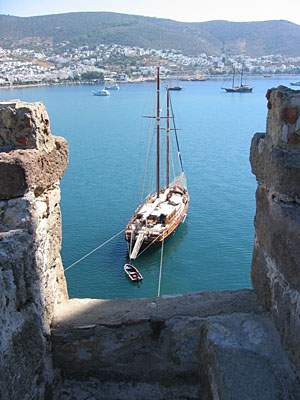
Bodrum --- Turkey
840km (521 miles) south of Istanbul; 240km (149 miles) south of Izmir; 180km (112 miles) west of Marmaris; 25km (16 miles) south of Bodrum Airport
Less than 100 years ago, Turkish writer Cevat Sakir Kabaagaçli was sentenced to exile in the dungeon of St. Peter's Castle as punishment for his politically incorrect writings. Times under the paranoid Abdülhamid II were harsh -- except the sultan apparently didn't know that the prison had been closed a decade earlier. With the help of the local governor, Cevat found a house overlooking the sea in which to live out his period of exile, enjoying a view so picturesque that it inspired him to pen piles of essays on the beauty and allure of life in what was then a laid-back fishing village.
As a probable result of this early bit of marketing, Bodrum has become Turkey's most popular seaside tourist destination, a perfect balance of whitewashed stucco hillside houses dripping in bougainvillea, magnificent vistas, historic imprints, and blow-out nightlife. St. Peter's Castle dominates every corner of Bodrum from its spot at the middle of Bodrum's twin harbors. The crumbled yet enduring remains of the Mausoleum, one of the Seven Ancient Wonders of the World, also resides in Bodrum. And although Turkey's most popular "party destination," by day Bodrum is a quiet but thriving holiday beach resort. In the summertime the city's twin harbors become densely packed with hundreds of the wooden gulets offering trips to the nearby islands or for the Mavi Yoluculu (the "Blue Cruise"), Cevat's romanticized weeklong journey along the glorious coastlines of the Mediterranean. Meanwhile, Bodrum's nightlife -- an all-night party organized by club owners each trying to outdo the excesses and spectacle of the other -- is infamous throughout Turkey. By night the city becomes a maniacal stream of human flesh flowing through the narrow expanse of "Bar Street," which empties onto an open harbor of more outdoor cafes and bars, the whole sporadically illuminated by a laser show emanating from the famed Halikarnas Night Club. From every vantage point in town, there's St. Peter's Castle, illuminated by spotlights shining on the ramparts.
Bodrum's popularity seems to have no limits, and as fast as the Turkish jet-set can lay its claim to a secluded cove or sandy bay, tourism follows, spurring the entitled class to seek new unspoiled hunting grounds. Examples of this can be seen all along the Bodrum Peninsula, in the boutique hotels and beaches of Torba and Türkbükü, in the expansive seasides at Yalikavak, Turgutreis, Ortakent, and Akyarlar, and in the poetry of the sunken ruins and waterside fish restaurants of Gümüslük. Clearly, Bodrum still has quite a long way to go before becoming just another one of Turkey's overbuilt seaside resorts.
Less than 100 years ago, Turkish writer Cevat Sakir Kabaagaçli was sentenced to exile in the dungeon of St. Peter's Castle as punishment for his politically incorrect writings. Times under the paranoid Abdülhamid II were harsh -- except the sultan apparently didn't know that the prison had been closed a decade earlier. With the help of the local governor, Cevat found a house overlooking the sea in which to live out his period of exile, enjoying a view so picturesque that it inspired him to pen piles of essays on the beauty and allure of life in what was then a laid-back fishing village.
As a probable result of this early bit of marketing, Bodrum has become Turkey's most popular seaside tourist destination, a perfect balance of whitewashed stucco hillside houses dripping in bougainvillea, magnificent vistas, historic imprints, and blow-out nightlife. St. Peter's Castle dominates every corner of Bodrum from its spot at the middle of Bodrum's twin harbors. The crumbled yet enduring remains of the Mausoleum, one of the Seven Ancient Wonders of the World, also resides in Bodrum. And although Turkey's most popular "party destination," by day Bodrum is a quiet but thriving holiday beach resort. In the summertime the city's twin harbors become densely packed with hundreds of the wooden gulets offering trips to the nearby islands or for the Mavi Yoluculu (the "Blue Cruise"), Cevat's romanticized weeklong journey along the glorious coastlines of the Mediterranean. Meanwhile, Bodrum's nightlife -- an all-night party organized by club owners each trying to outdo the excesses and spectacle of the other -- is infamous throughout Turkey. By night the city becomes a maniacal stream of human flesh flowing through the narrow expanse of "Bar Street," which empties onto an open harbor of more outdoor cafes and bars, the whole sporadically illuminated by a laser show emanating from the famed Halikarnas Night Club. From every vantage point in town, there's St. Peter's Castle, illuminated by spotlights shining on the ramparts.
Bodrum's popularity seems to have no limits, and as fast as the Turkish jet-set can lay its claim to a secluded cove or sandy bay, tourism follows, spurring the entitled class to seek new unspoiled hunting grounds. Examples of this can be seen all along the Bodrum Peninsula, in the boutique hotels and beaches of Torba and Türkbükü, in the expansive seasides at Yalikavak, Turgutreis, Ortakent, and Akyarlar, and in the poetry of the sunken ruins and waterside fish restaurants of Gümüslük. Clearly, Bodrum still has quite a long way to go before becoming just another one of Turkey's overbuilt seaside resorts.
Antalya --- Turkey

The city of Antalya stretches along the bay bearing its name, and is built at 39 meters altitude on a rocky coastline. One is immediately struck by the Taurus mountains rising to 3086 meters above this coastline, intersperesed withvalleys of varying sizes. Land and sea everywhere meet the beaches stretching for miles or the steep cliffs. The Taurus mountains against the blue backdrop of the sky, the precipices and especially the caves close to the sea add another dimension to the beauty of the region.
Small and large streams emerging from the west side of the Taurus water the plains on their journey to the Mediterranean. This translucent running water, cascading into the sea at points along the coast, is another attractive sight.
The plant life of Antalya is extremely varied. Every kind of tropical plant can be found along the coast. Visitors to Antalya are struck by the size attained by the different species of cactus. When you reach the foothills of the Taurus, you will see they are covered in the typical Mediterranean maquis, while the forests are full of thriving oaks and pine trees. The coton and sesame plantations and citrus and banana groves of the plains have a beauty of their own.
In Antalya the four seasons only appear on the calendar, as there is no real winter here, so much so that when in 1985 for the first time in 60 years snow fell, it was front page news.
The summers are hot and rainless while the other months are warm and often rainy, with a mean annual temperature of 18.7 °C. On average there is no rain for 309.5 days a year. It is very rare for the temperature to drop below zero. During the last 40 years the highest recorded temperature was 44.6 °C. In Antalya the average humidty rate is 64%, whereas the seat temperatures are 17.6 °C in January, 18.0 °C in April, 27.7 °C in August and 24.5 °C in September.
Hotels (Antalya)
More Information
Hotel's Web Site
RESORT DEDEMAN ANTALYA
483 Rooms, 1008 Beds, 1 Presidential Suite, 35 SuitesLARA YOLU 07100 ANTALYAOn The Beach, Near the City Center, 15 km Antalya Airport
PORTO BELLO HOTEL
346 Rooms, 850 Beds, 62 Family Rooms, 8 Executive Suites, 18 Executive De Luxe SuitesAKDENIZ BUL. 6. SOK. ANTALYAOn the beach, Antalya airport 20 km
CLUB HOTEL SERA
243 Rooms, 510 Beds, 218 Standart Rooms, 4 Family Rooms, 10 Junior Suites, 1 King Suite, 10 Bungalows, 5 Non-smoker Rooms07003 LARA ANTALYAOn The Beach, Antalya 12 km, 9 km Antalya Airport
TALYA HOTEL
204 Rooms, 420 Beds, 19 Suite Floors, 30 Special Rooms, 19 SuitesFEVZI CAKMAK CD. 30, 07100 ANTALYAOn The Beach, In City Center, Private Beach, 10 km Antalya Airport
FALEZ HOTEL ANTALYA
342 Rooms, 684 Beds, 2 Presidential Suites, Executive floor for businessmen, Non smokers floor, 12 Connection Room, 20 SuitesKONYAALTI FALEZ MEVKII P.K. 808, 07050 ANTALYAOn The Beach, Beach 500 m, 11km Antalya Airport
SHERATON VOYAGER ANTALYA HOTEL
395 Rooms, 920 Beds, Club 25, Smart 3, 22 Suites100. YIL BULVARI 07050 ANTALYAIn City Center, Near the Sea, Beach 300 m, 11 km Antalya International Airport
ADONIS HOTEL
227 Rooms, (2 King Suites, 16 Junior Suites, 20 Studio Suites), 38 SuitesESKI LARA YOLU 07100 LARA ANTALYAOn The Beach, In Antalya City Center, On The Beach, 15km Antalya Airport
KHAN HOTEL
104 Rooms, 232 Beds, 8 SuitesKAZIM OZALP CAD. NO:55 ANTALYAIn City Center, Beach 2km, 11 km Antalya Airport
SEALIFE HOTEL
134 Rooms, 300 Beds, 2 King Suites (2 Rooms, Hall and Jacuzzi), 8 SuitesKONYAALTI SAHIL SERIDI ANTALYAOn The Beach, Antalya 5km, 17 km Antalya Airport
LARA FALCON HOTEL
142 Rooms, 308 Beds, 6 SuitesSIRINYALI MAH. 1512 SK. NO: 2, 07100 LARA ANTALYANear The Sea, 6 km Antalya Airport
ANTALYA HOTEL
144 Rooms, 300 BedsESKI LARA YOLU NO: 102 ANTALYAOn The Beach, In City Center, 10 km Antalya Airport
TURIST HOTEL ANTALYA
42 Rooms, 84 BedsORNEKKOY MEVKII LARA ANTALYAOn The Beach, 7km Antalya Airport
ANTALYA START HOTEL
56 Rooms, 112 BedsALI CETINKAYA CD. NO: 19, 07100 ANTALYAIn City Center, Konyaalti Beach 1km, Lara Beach 15 km, 13 km Antalya Airport
BAYMURAT HOTEL
51 Rooms, 102 BedsLARA CAD. BARINAKLAR MEVKII 07100 ANTALYANear The Sea, Antalya 7km, Beach 3km, 12 km Antalya Airport
RESORT DEDEMAN PARK ANTALYA
64 Rooms, 128 Beds, 6 Doubleks Rooms, 10 SuitesLARA YOLU 07100 ANTALYAIn City Center, Near the Sea, 10 km Antalya Airport
NASA FLORA HOTEL
29 Rooms, 60 Beds, 1 SuitesESKI LARA CAD. NO:245 SIRINYALI MEVKII LARA ANTALYANear The Sea, Beach 100 m, 3 km Antalya , 7 km Antalya Airport
LARA OLIVIA HOTEL
52 Rooms, 150 Beds, 1 Family RoomLARA CAD. NO: 713, 07003 ANTALYANear The Sea, Antalya 7 km, Beach 100 m, 6 km Antalya Airport
Antalya --- Turkey
The city of Antalya stretches along the bay bearing its name, and is built at 39 meters altitude on a rocky coastline. One is immediately struck by the Taurus mountains rising to 3086 meters above this coastline, intersperesed withvalleys of varying sizes. Land and sea everywhere meet the beaches stretching for miles or the steep cliffs. The Taurus mountains against the blue backdrop of the sky, the precipices and especially the caves close to the sea add another dimension to the beauty of the region.
Small and large streams emerging from the west side of the Taurus water the plains on their journey to the Mediterranean. This translucent running water, cascading into the sea at points along the coast, is another attractive sight.
The plant life of Antalya is extremely varied. Every kind of tropical plant can be found along the coast. Visitors to Antalya are struck by the size attained by the different species of cactus. When you reach the foothills of the Taurus, you will see they are covered in the typical Mediterranean maquis, while the forests are full of thriving oaks and pine trees. The coton and sesame plantations and citrus and banana groves of the plains have a beauty of their own.
In Antalya the four seasons only appear on the calendar, as there is no real winter here, so much so that when in 1985 for the first time in 60 years snow fell, it was front page news.
The summers are hot and rainless while the other months are warm and often rainy, with a mean annual temperature of 18.7 °C. On average there is no rain for 309.5 days a year. It is very rare for the temperature to drop below zero. During the last 40 years the highest recorded temperature was 44.6 °C. In Antalya the average humidty rate is 64%, whereas the seat temperatures are 17.6 °C in January, 18.0 °C in April, 27.7 °C in August and 24.5 °C in September.
Hotels (Antalya)
More Information
Hotel's Web Site
RESORT DEDEMAN ANTALYA
483 Rooms, 1008 Beds, 1 Presidential Suite, 35 SuitesLARA YOLU 07100 ANTALYAOn The Beach, Near the City Center, 15 km Antalya Airport
PORTO BELLO HOTEL
346 Rooms, 850 Beds, 62 Family Rooms, 8 Executive Suites, 18 Executive De Luxe SuitesAKDENIZ BUL. 6. SOK. ANTALYAOn the beach, Antalya airport 20 km
CLUB HOTEL SERA
243 Rooms, 510 Beds, 218 Standart Rooms, 4 Family Rooms, 10 Junior Suites, 1 King Suite, 10 Bungalows, 5 Non-smoker Rooms07003 LARA ANTALYAOn The Beach, Antalya 12 km, 9 km Antalya Airport
TALYA HOTEL
204 Rooms, 420 Beds, 19 Suite Floors, 30 Special Rooms, 19 SuitesFEVZI CAKMAK CD. 30, 07100 ANTALYAOn The Beach, In City Center, Private Beach, 10 km Antalya Airport
FALEZ HOTEL ANTALYA
342 Rooms, 684 Beds, 2 Presidential Suites, Executive floor for businessmen, Non smokers floor, 12 Connection Room, 20 SuitesKONYAALTI FALEZ MEVKII P.K. 808, 07050 ANTALYAOn The Beach, Beach 500 m, 11km Antalya Airport
SHERATON VOYAGER ANTALYA HOTEL
395 Rooms, 920 Beds, Club 25, Smart 3, 22 Suites100. YIL BULVARI 07050 ANTALYAIn City Center, Near the Sea, Beach 300 m, 11 km Antalya International Airport
ADONIS HOTEL
227 Rooms, (2 King Suites, 16 Junior Suites, 20 Studio Suites), 38 SuitesESKI LARA YOLU 07100 LARA ANTALYAOn The Beach, In Antalya City Center, On The Beach, 15km Antalya Airport
KHAN HOTEL
104 Rooms, 232 Beds, 8 SuitesKAZIM OZALP CAD. NO:55 ANTALYAIn City Center, Beach 2km, 11 km Antalya Airport
SEALIFE HOTEL
134 Rooms, 300 Beds, 2 King Suites (2 Rooms, Hall and Jacuzzi), 8 SuitesKONYAALTI SAHIL SERIDI ANTALYAOn The Beach, Antalya 5km, 17 km Antalya Airport
LARA FALCON HOTEL
142 Rooms, 308 Beds, 6 SuitesSIRINYALI MAH. 1512 SK. NO: 2, 07100 LARA ANTALYANear The Sea, 6 km Antalya Airport
ANTALYA HOTEL
144 Rooms, 300 BedsESKI LARA YOLU NO: 102 ANTALYAOn The Beach, In City Center, 10 km Antalya Airport
TURIST HOTEL ANTALYA
42 Rooms, 84 BedsORNEKKOY MEVKII LARA ANTALYAOn The Beach, 7km Antalya Airport
ANTALYA START HOTEL
56 Rooms, 112 BedsALI CETINKAYA CD. NO: 19, 07100 ANTALYAIn City Center, Konyaalti Beach 1km, Lara Beach 15 km, 13 km Antalya Airport
BAYMURAT HOTEL
51 Rooms, 102 BedsLARA CAD. BARINAKLAR MEVKII 07100 ANTALYANear The Sea, Antalya 7km, Beach 3km, 12 km Antalya Airport
RESORT DEDEMAN PARK ANTALYA
64 Rooms, 128 Beds, 6 Doubleks Rooms, 10 SuitesLARA YOLU 07100 ANTALYAIn City Center, Near the Sea, 10 km Antalya Airport
NASA FLORA HOTEL
29 Rooms, 60 Beds, 1 SuitesESKI LARA CAD. NO:245 SIRINYALI MEVKII LARA ANTALYANear The Sea, Beach 100 m, 3 km Antalya , 7 km Antalya Airport
LARA OLIVIA HOTEL
52 Rooms, 150 Beds, 1 Family RoomLARA CAD. NO: 713, 07003 ANTALYANear The Sea, Antalya 7 km, Beach 100 m, 6 km Antalya Airport
Alanya --- Turkey

Alanya is located on a peninsula which is bordered by the Taurus Mountains in the north and the Mediterranean Sea on the south. This ancient city was named either Pamphylia or Cilicia because of it lies between the two region. There is no definite information about the first founding of Alanya. Prof. Dr. Kılınç Kökten’s researches in1957 in Kadıini Cave which is located 12 km from the centre of the city, shows us the history of the region that goes to late Paleolitic period.When or who was founded Alanya is unknown. Known in Latin as Coracesium, or in Greek as Korakesion from the Luwian Korakassa meaning “point-protruding city.”Left to Ptolemy I Soter after 323 BC, his dynasty maintained loose control, and it became a popular spot for Mediterranean pirates who were at times loyal Diodotus Tryphon of the Seleucid Kingdom. This period ended with the city’s incorporation into the Roman Empire by Pompey in 65 BC. After the empires collapse and split the city remained under Byzantine influence, becoming known as “Kolonoros,” or beautiful mountain. The area fell from their sphere of influence after the Battle of Manzikert to tribes of Seljuk Turks, only to be returned in 1097 by Alexios I Komnenos and forces of the First Crusade. The Armenian Kingdom of Cilicia periodically held the port, and it was from an Armenian, Kir Fard, that Muslims took lasting control in 1221 when the Anatolian Seljuk Sultan Alaaddin Keykubat exchanged governance of the city of Akşehir for it. The the city was renamed Alaiye, a derivative of Alaaddin. Seljuk rule saw the golden age of the city, and it can be considered the winter capital of their empire. Building projects, including the twin citadel, city walls, arsenal, and Red Tower made it an important port for western Mediterranean trade, particularly with Ayyubid Egypt and the Italian city-states. Keykubat also constructed numerous gardens and pavilions outside the walls, and many of his works can still be found in the city.The Mongol invasion broke down Seljuk control, and the city fell to a series of beyliks, and even to Lusignans from Cyprus. The city was sold by the Karamanoğlu dynasty in 1427 to the Mamluk dynasty for a period before Fatih Sultan Mehmet in 1471 incorporated it into the growing Ottoman Empire. In 1571 the city was organized into the province of Cyprus, then later under Konya, and in 1868 under Antalya, as it is today. In his 1935 visit, Atatürk finalized the name in the new alphabet as Alanya.


Alanya --- Turkey
Alanya is located on a peninsula which is bordered by the Taurus Mountains in the north and the Mediterranean Sea on the south. This ancient city was named either Pamphylia or Cilicia because of it lies between the two region. There is no definite information about the first founding of Alanya. Prof. Dr. Kılınç Kökten’s researches in1957 in Kadıini Cave which is located 12 km from the centre of the city, shows us the history of the region that goes to late Paleolitic period.When or who was founded Alanya is unknown. Known in Latin as Coracesium, or in Greek as Korakesion from the Luwian Korakassa meaning “point-protruding city.”Left to Ptolemy I Soter after 323 BC, his dynasty maintained loose control, and it became a popular spot for Mediterranean pirates who were at times loyal Diodotus Tryphon of the Seleucid Kingdom. This period ended with the city’s incorporation into the Roman Empire by Pompey in 65 BC. After the empires collapse and split the city remained under Byzantine influence, becoming known as “Kolonoros,” or beautiful mountain. The area fell from their sphere of influence after the Battle of Manzikert to tribes of Seljuk Turks, only to be returned in 1097 by Alexios I Komnenos and forces of the First Crusade. The Armenian Kingdom of Cilicia periodically held the port, and it was from an Armenian, Kir Fard, that Muslims took lasting control in 1221 when the Anatolian Seljuk Sultan Alaaddin Keykubat exchanged governance of the city of Akşehir for it. The the city was renamed Alaiye, a derivative of Alaaddin. Seljuk rule saw the golden age of the city, and it can be considered the winter capital of their empire. Building projects, including the twin citadel, city walls, arsenal, and Red Tower made it an important port for western Mediterranean trade, particularly with Ayyubid Egypt and the Italian city-states. Keykubat also constructed numerous gardens and pavilions outside the walls, and many of his works can still be found in the city.The Mongol invasion broke down Seljuk control, and the city fell to a series of beyliks, and even to Lusignans from Cyprus. The city was sold by the Karamanoğlu dynasty in 1427 to the Mamluk dynasty for a period before Fatih Sultan Mehmet in 1471 incorporated it into the growing Ottoman Empire. In 1571 the city was organized into the province of Cyprus, then later under Konya, and in 1868 under Antalya, as it is today. In his 1935 visit, Atatürk finalized the name in the new alphabet as Alanya.
Kaydol:
Kayıtlar (Atom)